
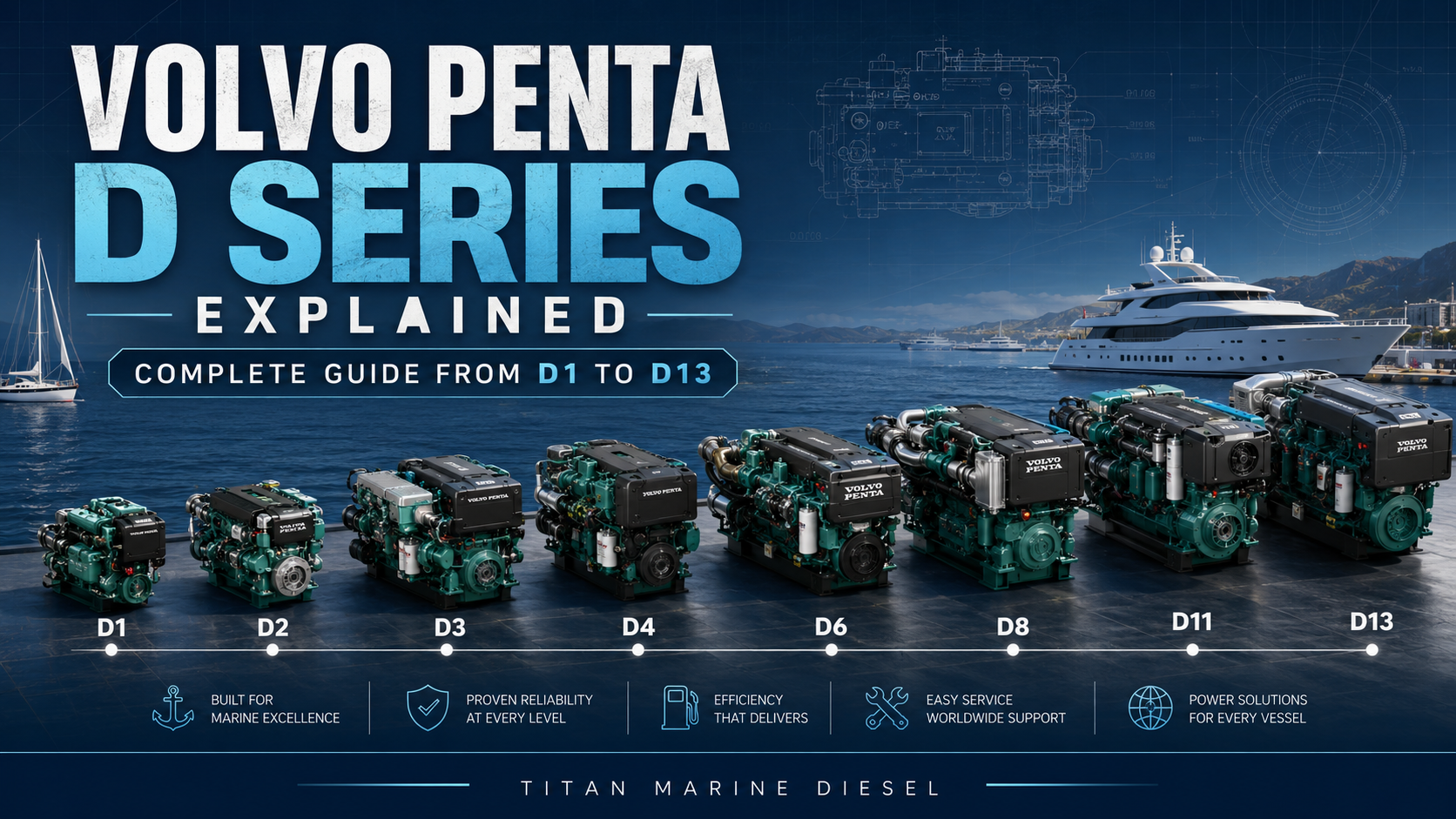
Volvo Penta D Series Explained – Complete Guide from D1 to D13 – Which Engine Is Right for Your Boat?
Choosing between a Volvo Penta D1, D2, D4, D6, D8, D11 and D13 can feel confusing.
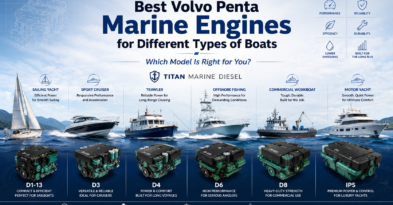
The model numbers move upward, but they do not create a simple ladder where a larger number is automatically the better choice. Each engine family is designed for a different range of vessel weights, hull types, operating hours, propulsion systems, and performance requirements.
At Titan Marine Diesel, we regularly receive enquiries that begin with a horsepower request:
“I need a 400 HP Volvo Penta engine.”
Horsepower is important, but it is not enough to recommend a propulsion package responsibly.
We also need to know what the boat weighs when fully loaded, whether the hull is displacement or planing, how many hours the engine will run annually, what gearbox or drive is installed, and what cruising speed the owner expects.
This guide provides a practical explanation of the Volvo Penta D Series, from compact sailboat engines to high-output propulsion packages for yachts and commercial vessels.
By the end, you should understand which engine families deserve closer consideration—and which technical details must still be confirmed before placing an order.
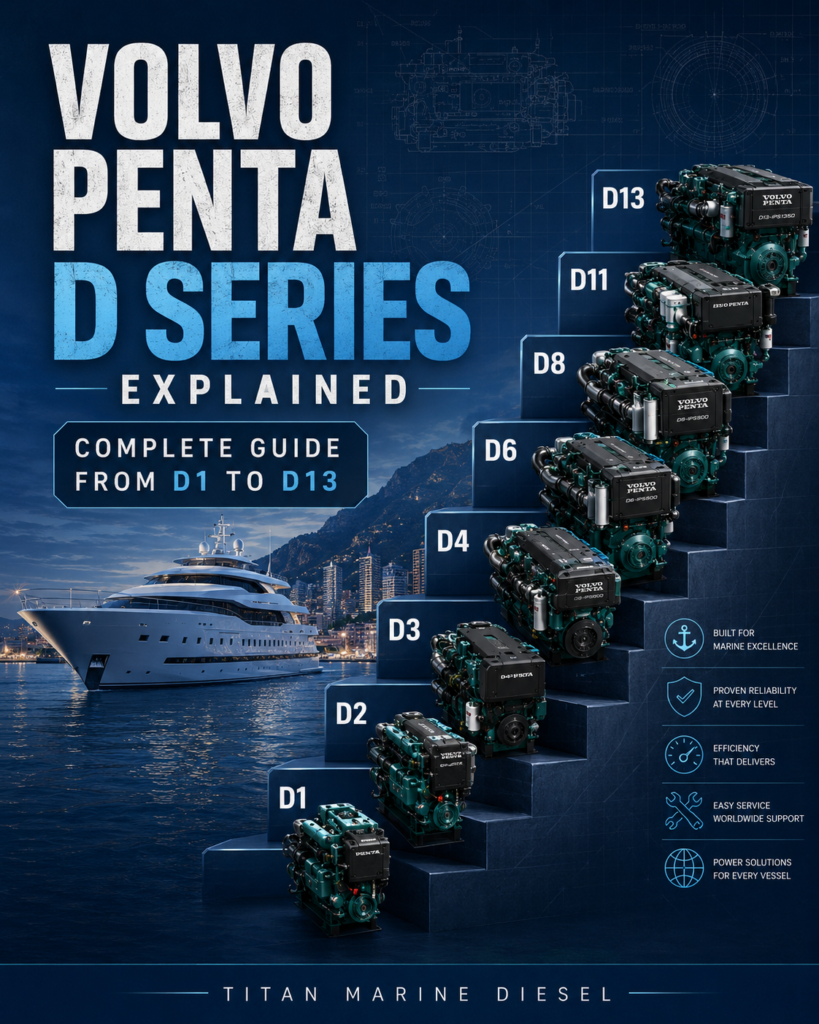
Quick Volvo Penta D-Series Comparison – Volvo Penta D Series Explained
| Engine family | General application | Common propulsion | Main strength |
|---|---|---|---|
| D1 | Smaller sailing yachts | Shaft or saildrive | Compact auxiliary propulsion |
| D2 | Larger sailing yachts and displacement boats | Shaft or saildrive | More power in a compact package |
| D3 | Lightweight planing boats and existing installations | Inboard or sterndrive | Strong power-to-weight ratio |
| D4 | Cruisers, fishing boats and workboats | Shaft, DPH or DPI | Versatile four-cylinder performance |
| D6 | Sport cruisers, yachts and commercial craft | Shaft, Aquamatic or IPS | Six-cylinder torque and broad application range |
| D8 | Larger yachts and commercial vessels | Shaft or IPS | High output from a compact commercial platform |
| D11 | Large motor yachts and demanding workboats | Shaft or IPS | Strong torque for heavier vessels |
| D13 | Large yachts and heavy commercial craft | Shaft or IPS | High-output propulsion |
This table is only a starting point. Final engine selection requires the vessel’s loaded displacement, hull design, duty cycle and driveline specifications.
Readers who need a broader purchasing overview should also review our Complete Volvo Penta Marine Engine Buying Guide.
Understanding Volvo Penta D-Series Model Names
The “D” identifies a Volvo Penta diesel engine family.
The number after the letter generally distinguishes the engine platform or displacement class. It should not be treated as a perfectly continuous sequence, which is why the range moves from D4 to D6 and from D8 to D11.
The number after the hyphen usually represents the marketed horsepower rating. For example:
However, buyers should always confirm the complete model designation.
A D6 inboard engine is not automatically the same package as a D6 Aquamatic or D6 IPS system. The engine rating, controls, driveline, operating duty and included components may differ.
When requesting a quotation, provide:
- Full engine model
- Serial number, when available
- Gearbox or drive model
- Reduction ratio
- Recreational or commercial application
- Required propulsion configuration
Volvo Penta D1 Series Explained
The Volvo Penta D1 Series occupies the compact end of the marine diesel range.
Current D1 inboard engines use a small, naturally aspirated diesel platform with freshwater cooling. They are mainly associated with auxiliary propulsion for smaller sailing yachts and compact displacement boats. (Volvo Penta)
A D1 may be appropriate when:
- Engine-room space is limited
- The vessel operates at displacement speed
- High horsepower is unnecessary
- Low installed weight is important
- The boat uses shaft drive or saildrive propulsion
The D1 should not be selected solely because it fits the compartment.
A heavily loaded sailing yacht may need enough reserve power to motor against strong current, wind and rough sea conditions. Electrical demand should also be considered when the vessel carries refrigeration, navigation systems, a watermaker or other onboard loads.
Before buying, confirm:
- Fully loaded displacement
- Existing engine output
- Shaft or saildrive arrangement
- Propeller specification
- Alternator requirements
- Installation and maintenance access
Browse our Volvo Penta D1 marine engines or read Volvo Penta D1 vs D2 for a closer comparison.
Volvo Penta D2 Series Explained
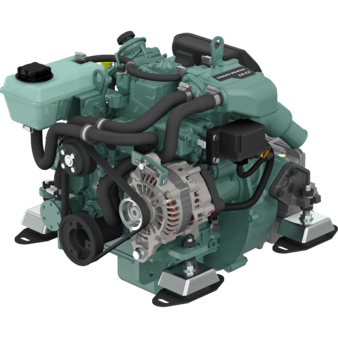
The Volvo Penta D2 Marine Engines provides more power for larger sailing yachts, motor sailers and compact displacement vessels.
The current D2 platform is an inline four-cylinder, 2.2-litre, naturally aspirated diesel with freshwater cooling. (Volvo Penta)
Typical applications include:
- Medium-sized sailing yachts
- Heavier motor sailers
- Compact trawlers
- Displacement cruisers
- Shaft-drive repowers
- Saildrive repowers
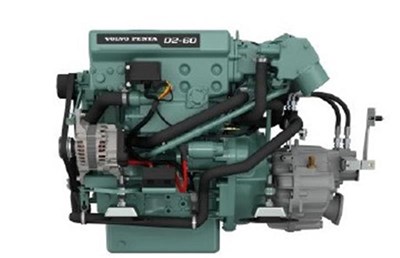
Representative models include the Volvo Penta D2-50, D2-60 and D2-75.
The D2 often appeals to buyers who need greater output than a D1 while retaining a compact and relatively straightforward package.
During a repower, check:
- Engine-mount centres
- Exhaust outlet diameter
- Shaft position and alignment
- Cooling-water supply
- Saildrive compatibility
- Propeller size and pitch
- Installation-hatch dimensions
Volvo Penta has offered repower kits intended to simplify selected D1 and D2 replacement installations, but compatibility still depends on the existing engine and driveline. (Volvo Penta)
Explore our Volvo Penta D2 marine engines and Volvo Penta sailboat engine packages for available configurations.
Volvo Penta D3 Series Explained
The Volvo Penta D3 Marine Engines require more context than the other families.
Volvo Penta’s current public marine catalog emphasizes the D1, D2, D4, D6, D8, D11 and D13 families. The D3 nevertheless remains important because many existing recreational boats were built with D3 inboard and sterndrive packages. Volvo Penta’s earlier D3 generation used Electronic Vessel Control and was marketed as a compact diesel platform for both inboard and sterndrive installations. (Volvo Penta)
The D3 became popular for:
- Lightweight planing boats
- Smaller sport cruisers
- Day boats
- Compact motor yachts
- Installations where engine weight was restricted
When evaluating a D3-powered boat, verify:
- Complete model and production year
- Engine hours
- Maintenance records
- Diagnostic fault history
- Cooling-system condition
- Turbocharger performance
- Transmission or sterndrive condition
- Ability to reach rated RPM under load
A D4 may be the better direction when the vessel is heavier, commercial operation is expected or a current production package is preferred.
Readers evaluating an existing installation should review our Volvo Penta D3 engine guide and used marine diesel engine inspection checklist.
Volvo Penta D4 Series Explained
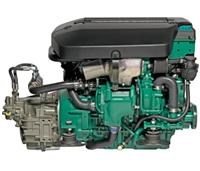
The Volvo Penta D4 Marine Engine is one of the most versatile engines in the range.
It is an inline four-cylinder, 3.7-litre common-rail diesel platform available in inboard and integrated Aquamatic configurations. (Volvo Penta)
Common applications include:
- Sport cruisers
- Offshore fishing boats
- Patrol craft
- Pilot boats
- Passenger launches
- Commercial workboats
- Single- and twin-engine repowers
A buyer may choose a D4 when the boat needs more torque than a compact diesel can comfortably provide without moving into the larger D6 platform.
Depending on the exact package, the D4 may be connected to:
- Conventional marine gearbox and shaft
- DPH Duoprop sterndrive
- DPI sterndrive
Representative products include the Volvo Penta D4-230, D4-270, D4-300 and D4-320.
When Is a D4 the Right Choice?
A D4 deserves consideration when:
- A compact four-cylinder package is preferred
- The vessel is a medium-sized cruiser or workboat
- Inboard or Aquamatic propulsion is required
- Strong planing performance matters
- The engine will operate within an appropriate recreational or commercial rating
When Should You Move to a D6?
Consider a D6 when:
- The vessel is substantially heavier
- Greater output is required
- Six-cylinder smoothness is preferred
- Load varies significantly
- Higher sustained cruise performance is expected
- The required drive configuration is better supported by the D6
Browse our Volvo Penta D4 marine engines or read the complete Volvo Penta D4 vs D6 comparison.
Volvo Penta D6 Series Explained
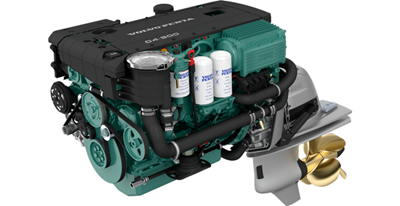
The Volvo Penta D6 Marine Engine is a 5.5-litre inline six-cylinder common-rail diesel platform. It is available in several inboard, Aquamatic and IPS configurations, depending on the rating and market. (Volvo Penta)
The D6 is commonly considered for:
- Express cruisers
- Offshore sport-fishing boats
- Motor yachts
- Patrol vessels
- Passenger boats
- Commercial workboats
- Twin-engine installations
- Waterjet applications
- IPS-powered vessels
Its appeal comes from the combination of strong torque, six-cylinder refinement and broad propulsion compatibility.
Representative models include the Volvo Penta D6-300, D6-340, D6-380, D6-400, D6-440 and D6-480.
Exact availability depends on whether the buyer needs:
- Inboard shaft propulsion
- DPH or DPI Aquamatic
- IPS
- Commercial or recreational rating
- Engine only or complete package
D6 Inboard vs Aquamatic vs IPS
| Configuration | Best suited to | Main consideration |
|---|---|---|
| D6 inboard | Conventional yachts and commercial vessels | Gearbox, shaft and propeller matching |
| D6 Aquamatic | Planing cruisers and performance boats | Sterndrive servicing and transom installation |
| D6 IPS | Compatible yachts and cruisers | Hull design, pod installation and electronic integration |
A D6 may be excessive for a lightweight boat whose structure, drive or propeller system cannot use the available torque.
Conversely, a D8 may be preferable when the vessel’s displacement and commercial workload would keep the D6 operating too close to its limits.
Explore our Volvo Penta D6 marine engines, D6 Aquamatic packages and D6 IPS propulsion systems.
Volvo Penta D8 Series Explained
The Volvo Penta D8 Marine Engines is a 7.7-litre inline six-cylinder common-rail diesel used in larger recreational and commercial installations. Current offerings include inboard and IPS packages. (Volvo Penta)
Typical applications include:
- Larger motor yachts
- Passenger vessels
- Offshore fishing boats
- Patrol craft
- Commercial workboats
- Fast ferries
- Twin-engine IPS installations
The D8 is an important step up from the D6 because it supports higher vessel loads and more demanding operating profiles.
At this level, buyers must review:
- Engine-room ventilation
- Exhaust sizing
- Fuel-flow requirements
- Gearbox torque capacity
- Shaft and propeller calculations
- Service access
- Commercial duty rating
Current D8 IPS packages combine the engine with steerable pods, counter-rotating propellers and Electronic Vessel Control. Optional integrated functions can include joystick maneuvering and dynamic positioning. (Volvo Penta)
Browse our Volvo Penta D8 marine engines, including D8 inboard and D8 IPS packages.
Volvo Penta D11 Series Explained
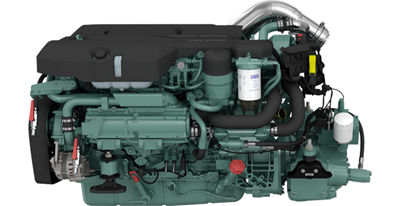
The Volvo Penta D11 Marine Engine is positioned for large motor yachts and demanding commercial craft.
The D11 IPS platform uses a 10.8-litre inline six-cylinder common-rail diesel engine. It has been used in integrated IPS systems for larger yachts and performance vessels. (Volvo Penta)
Typical applications include:
- Large motor yachts
- Sport-fishing yachts
- Passenger vessels
- Patrol boats
- Commercial workboats
- Twin-engine shaft installations
- IPS-powered yachts
A D11 may be considered when the D8 cannot provide the required output or load capability but the project does not yet require the larger D13.
Selection must account for:
- Fully loaded vessel displacement
- Required cruising speed
- Gearbox ratio
- Propeller and shaft capacity
- Annual operating hours
- Duty rating
- Cooling and ventilation
- Available engine-room space
Read our Volvo Penta D11 vs D13 guide or browse available Volvo Penta D11 marine engines.
Volvo Penta D13 Series Explained
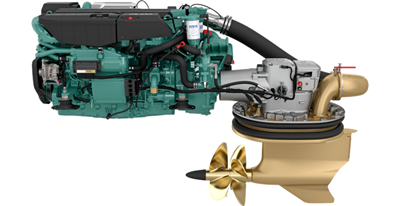
The Volvo Penta D13 Marine Engine is a 12.8-litre inline six-cylinder diesel platform designed for high-output marine propulsion. (Volvo Penta)
It may be used in:
- Large motor yachts
- Commercial passenger vessels
- Patrol craft
- Fishing vessels
- Fast workboats
- Heavy shaft-drive installations
- High-output IPS systems
Representative ratings include the Volvo Penta D13-800, D13-900 and D13-1000, subject to configuration and regional availability.
D13 IPS packages have also been used in large performance yachts and professional vessels, including multiple-engine installations. (Volvo Penta)
A D13 should not be ordered until the following have been engineered:
- Vessel resistance
- Required continuous power
- Gearbox selection
- Reduction ratio
- Shaft dimensions
- Propeller design
- Exhaust backpressure
- Cooling capacity
- Engine-room airflow
- Structural mounting
- Control-system integration
The D13 is powerful, but it is not automatically the right choice simply because it is the largest family in this guide.
Browse our Volvo Penta D13 marine engines and D13 IPS packages.
D4 vs D6 vs D8: Which Step Is Right?
These are three of the most frequently compared families.
Choose a D4 when:
- A compact four-cylinder engine is suitable
- The vessel falls within the D4’s load capability
- Inboard or Aquamatic propulsion is preferred
- Machinery space is limited
- The boat is a medium-sized cruiser or workboat
Choose a D6 when:
- More torque and horsepower are required
- The vessel carries greater load
- Six-cylinder smoothness matters
- Aquamatic, inboard or IPS options are being considered
- Offshore cruising performance is a priority
Choose a D8 when:
- The boat moves into a larger power class
- Commercial operating hours increase
- The D6 would work too close to maximum load
- Larger shaft or IPS packages are required
- Duty rating becomes a primary consideration
The correct decision should be based on the vessel’s loaded condition, not its brochure weight.
Which Volvo Penta D Series Fits Your Boat?
Sailing yachts
The D1 and D2 are the natural starting points.
Choose between them using:
- Loaded displacement
- Offshore operating conditions
- Shaft or saildrive configuration
- Motoring requirements
- Electrical demand
See Best Volvo Penta Engines for Sailboats for a more detailed comparison.
Sport cruisers
The D3, D4 and D6 may all appear in this market.
A lightweight existing boat may use a D3. A modern medium-sized cruiser may be better suited to a D4, while heavier and faster vessels often move toward the D6.
Sport-fishing boats
Consider the D4, D6, D8 or D11 depending on size and load.
Remember that a fishing boat may carry:
- Large fuel capacity
- Ice
- Bait tanks
- Tower
- Generator
- Crew
- Fishing equipment
The engine must be sized for the loaded boat, not an empty hull.
Workboats and passenger vessels
The D4 through D13 may be relevant.
Commercial buyers must prioritize:
- Annual operating hours
- Average load
- Full-load duration
- Downtime cost
- Service access
- Correct duty rating
The highest horsepower rating is not always the most economical commercial choice.
Recreational vs Commercial Duty
Duty rating is one of the most important—and most frequently ignored parts of engine selection.
A recreational vessel may run limited annual hours at changing loads. A passenger boat, fishing vessel or charter craft may operate daily and remain under sustained load for long periods.
Warranty and allowable operating profiles vary by engine family and rating. Volvo Penta’s published commercial warranty tables differentiate among D1/D2, D4/D6 and the larger D8/D11/D13 platforms and also apply hour limits to several commercial ratings. (Volvo Penta)
Always describe the vessel’s real application when requesting a quotation.
New Installation or Repower?
A new installation begins with hull and propulsion calculations.
A repower begins with the limitations of the existing boat.
Before ordering a Volvo Penta replacement engine, measure:
- Engine length, width and height
- Mounting centres
- Gearbox output location
- Shaft angle
- Exhaust diameter
- Cooling-water connections
- Electrical voltage
- Ventilation
- Installation-hatch dimensions
- Maintenance clearance
An engine can fit in the machinery space and still be too large to pass through the hatch.
Moving from D4 to D6, D6 to D8 or D11 to D13 may also require replacing the gearbox, shaft, propeller, exhaust, cooling and engine mounts.
Review our Complete Volvo Penta Repower Guide before choosing a larger engine family.
Engine Only or Complete Package?
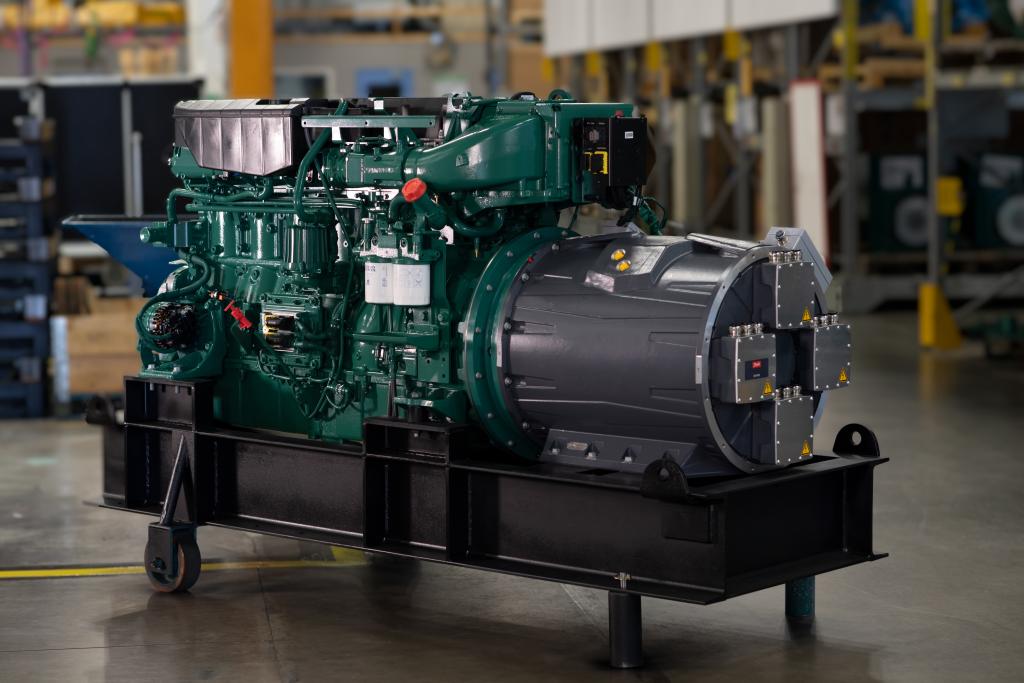
Do not compare a bobtail-engine price with a complete propulsion package.
A Volvo Penta bobtail engine may exclude:
- Gearbox
- Sterndrive or IPS pod
- Controls
- Displays
- Harnesses
- Steering
- Propellers
- Installation components
A proper quotation should identify:
- Exact engine model
- Gearbox or drive
- Reduction ratio
- Controls and displays
- Included accessories
- Exclusions
- Warranty
- Stock or lead time
- Packing and freight
Read our Volvo Penta Marine Engine Price Guide for a complete explanation of package costs.
Common D-Series Buying Mistakes
The mistakes we see most often include:
- Selecting by boat length alone
- Choosing the highest horsepower automatically
- Ignoring the duty rating
- Reusing an unsuitable gearbox
- Failing to verify the reduction ratio
- Assuming old controls will work
- Comparing engine-only and complete-package prices
- Ignoring installation access
- Buying before confirming local service support
The fastest way to waste money is to order the engine first and solve compatibility problems later.
Information Titan Marine Diesel Needs
To recommend the correct D-Series package, provide:
- Vessel make and model
- Length, beam and loaded weight
- Hull type
- Current engine model
- Current horsepower and rated RPM
- Gearbox or drive model
- Reduction ratio
- Propeller details
- Recreational or commercial use
- Expected annual operating hours
- Required cruising speed
- Single- or twin-engine installation
- Freshwater or saltwater operation
- Delivery destination
- Required lead time
Photographs of the engine identification plate, gearbox plate, machinery space, mounts, controls and exhaust arrangement are also useful.
Final Answer: Which Volvo Penta D Series Should You Choose?
Choose a Volvo Penta D1 or D2 for many sailing-yacht and displacement applications.
Evaluate a Volvo Penta D3 carefully when dealing with an existing or older lightweight installation.
Choose a Volvo Penta D4 for versatile mid-range recreational and commercial propulsion.
Choose a Volvo Penta D6 when the vessel needs more torque, six-cylinder refinement and broader driveline options.
Choose a Volvo Penta D8 for larger yachts and more demanding commercial loads.
Choose a Volvo Penta D11 for substantial motor-yacht and workboat applications.
Choose a Volvo Penta D13 for high-output large-vessel propulsion where the complete driveline has been properly engineered.
The right engine is not the one with the largest number.
It is the one that matches the vessel’s hull, loaded displacement, duty cycle, gearbox, propeller and intended performance.
Titan Marine Diesel supports recreational and commercial buyers with Volvo Penta engine selection, model comparisons, complete propulsion packages, repower guidance and worldwide shipping coordination.
Browse our Volvo Penta marine engines or request a Volvo Penta D-Series quotation by sending us your vessel specifications, current propulsion details, destination and required lead time.

Comment (1)
[…] correct engine is not the largest Volvo Penta model that fits inside the machinery […]